
Rare species coexist harmoniously in Nantong
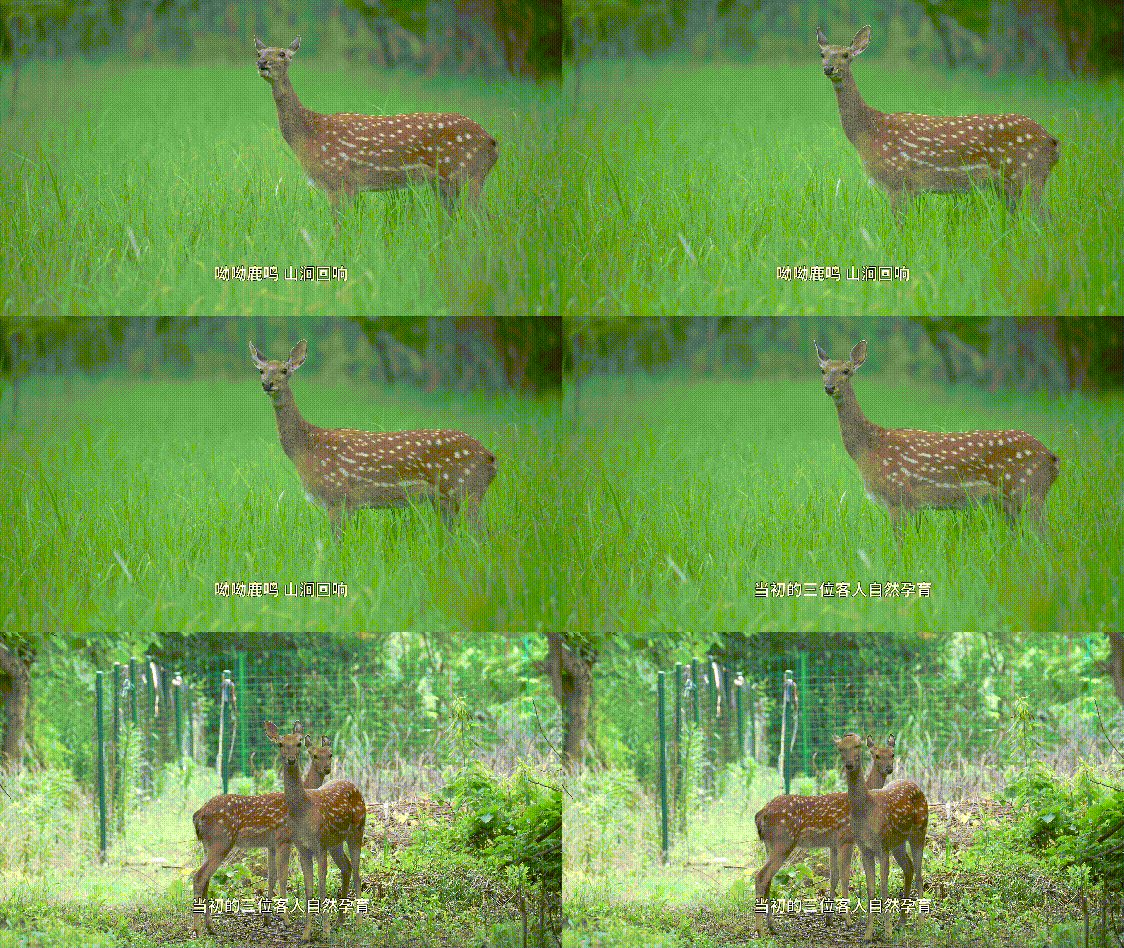
Sika deer are found on Junshan Mountain. [Photo/Nantong Daily]
The mountains of Langshan, Junshan, Jianshan, Ma'anshan, and Huangnishan stand by the Yangtze River in Nantong, Jiangsu province, forming the last ecological barrier before the river flows into the sea.
Wu Weimin, an ecological photography enthusiast in Nantong, said that so far, photography enthusiasts in the city have recorded over 260 species of birds in the riverside area. On Junshan Mountain, they often encounter sika deer, a national first-class protected animal.
He noted that the environment in the Five Mountains riverside area has undergone significant changes over the years.
Since 2016, Nantong has been promoting the development of the riverside area with the strategy of "industry retreat, port relocation, urban advancement, and ecological conservation". This has freed up and restored 5.5 kilometers of shoreline and added over 6 square kilometers of forest space, transforming the former "industrial rust belt" into a riverside green wilderness.
In 2018, the Five Mountains were approved as a national forest park and currently, the forest coverage rate in the area exceeds 80 percent, making it the "ecological green lung" of Nantong.
The reappearance of sika deer seems like a chapter in an enchanting fairy tale. In 2019, three of these white-flecked deer – a male and two females – wandered into Junshan Mountain from a nearby breeding farm. To ensure these "unexpected guests" could reside peacefully there, people built small reservoirs to store water and set up drinking points in areas where they frequently appeared. The initial trio naturally expanded into a family of six or seven.
Observation data from 2021 to 2022 show that the Five Mountains riverside area recorded a total of 1,293 living species, including 31 rare and endangered ones. The latest monitoring results released in May last year indicate that the total number of species in the area has reached 1,340, an increase of 47.


 TRANSPORTATION
 EDUCATION
 HEALTHCARE
 USEFUL NUMBERS