
Metasequoia trees in Nantong turn into color palette
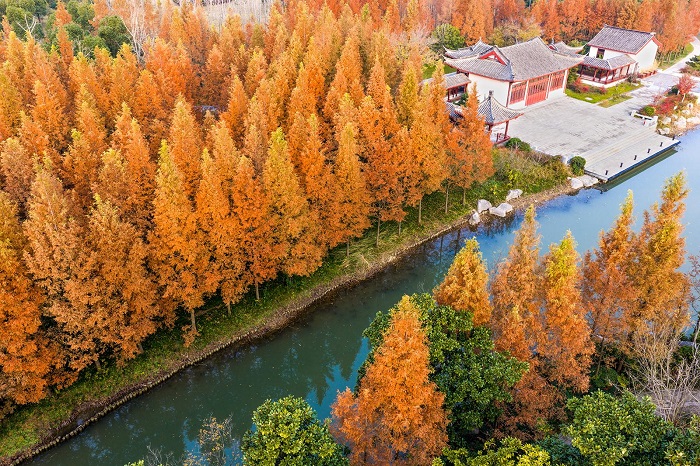
Leaves of metasequoia trees in Nantong turn into a vibrant reddish hue. [Photo/Nantong Daily]
The leaves of metasequoia trees near the aquatic area of Nantong Botanical Garden, Jiangsu province, have recently turned a vibrant reddish hue, creating a striking contrast with the lush evergreen trees.
Viewed from above, this roughly 4-hectare forest displays distinct layers of color, beautifully enhancing the surrounding lake.
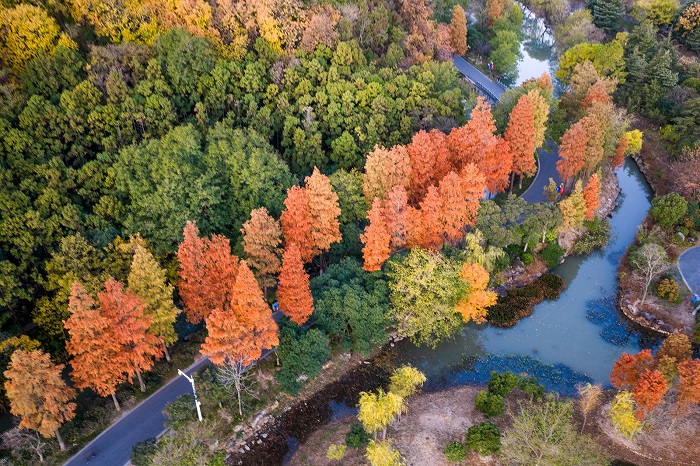
A bird's-eye view of the metasequoia trees in Nantong. [Photo/Nantong Daily]
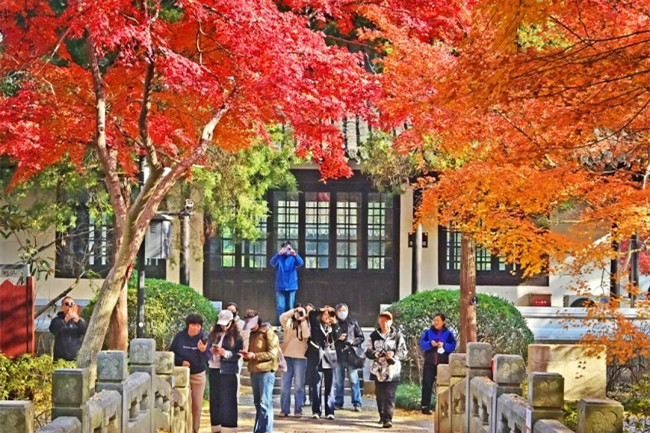
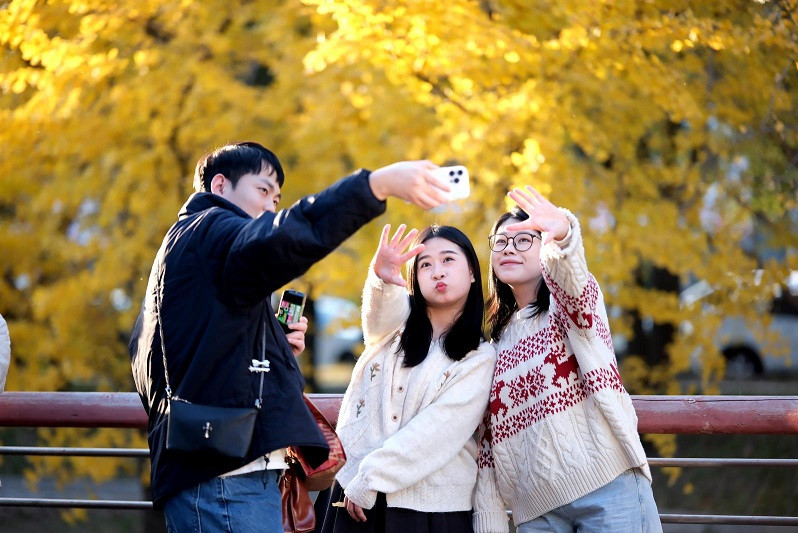
Meanwhile, the Langshan Mountain Scenic Area is filled with vibrant colors as the leaves of red maples, ginkgo trees, metasequoia, and sycamores display a kaleidoscope of reds, yellows, and purples.
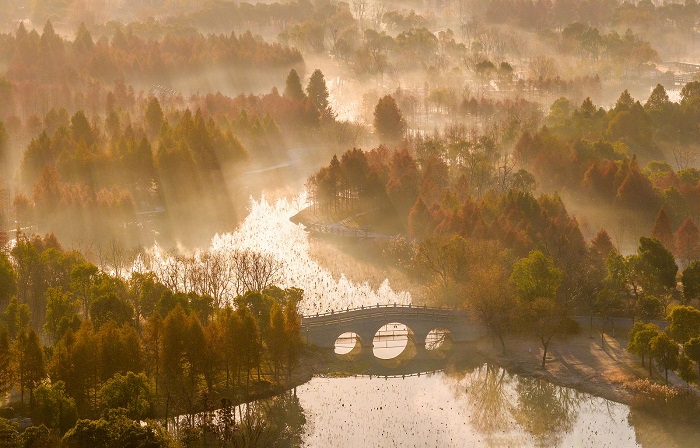
Metasequoia trees in Nantong are bathed in the light of the early morning sun. [Photo/Nantong Daily]
Early winter in Nantong looks like a spilled palette, hosting the year's most dazzling "fashion show". In urban areas like the Nantong Museum, Wenfeng Park, and Seyuan Garden, various ornamental trees are showcasing their brightest colors, especially the color-changing species like metasequoia and pond cypress.
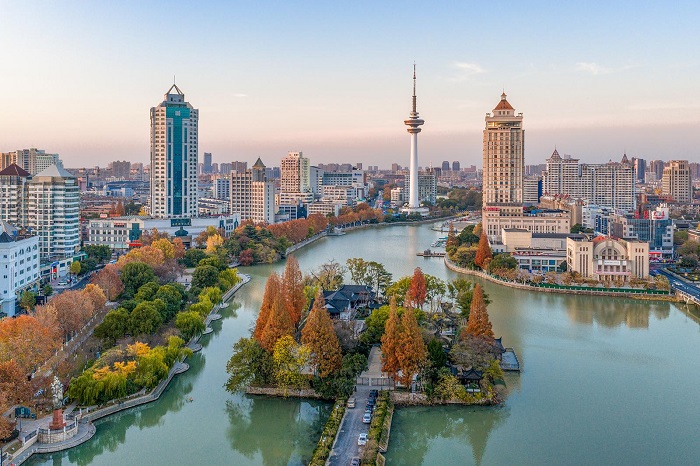
A view of early winter in Nantong. [Photo/Nantong Daily]
Why do species like metasequoias change colors during this time? This phenomenon mainly results from changes in leaf pigments caused by temperature fluctuations. As temperatures fall and the gap between day and night temperatures widens, anthocyanin builds up faster in the leaves, turning them from green to bright red. In contrast, the leaves of ginkgo trees, for example, turn yellow or orange as chlorophyll production declines, allowing pigments like lutein and carotene to stand out.


 TRANSPORTATION
 EDUCATION
 HEALTHCARE
 USEFUL NUMBERS