After years of neglect, Guangdong river is slowly returning to former pristine glory
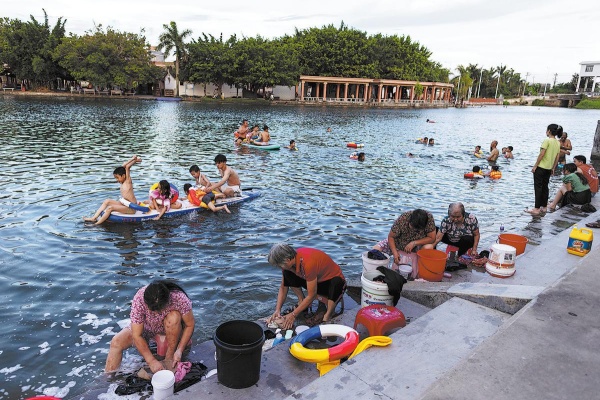
Children play in swim rings and rafts while adults do the laundry in a tributary of the Lianjiang River in Shantou, Guangdong province, in June. Zhang Youqiong/Yao Zhihao/Nanfang Daily
Editor's note: As protection of the planet's flora, fauna and resources becomes increasingly important, China Daily is publishing a series of stories to illustrate the country's commitment to safeguarding the natural world.
The Lianjiang River, named for its clear, silk-like waters, originates in Puning of the city of Jieyang in Guangdong province, and empties into Haimen Port in the Guangdong city of Shantou. Running 71.1 kilometers, it supports a population of approximately 5 million.
During the economic boom of the late 20th century, the river's water quality deteriorated due to industrial pollution and increased population density, leading to the disappearance of aquatic life and earning it the reputation of being one of Guangdong's most polluted rivers.
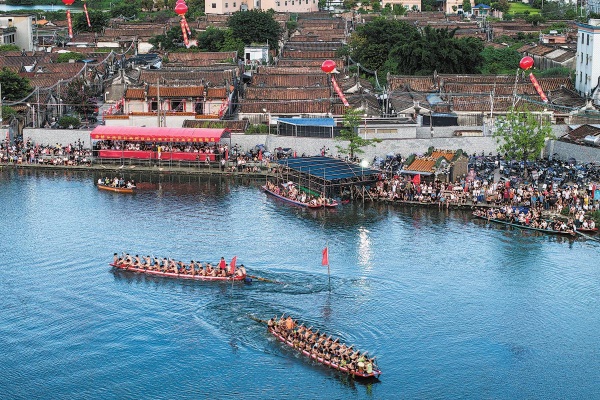
A dragon boat race is held on the Lianjiang River in Shantou in June. ZHANG YOUQIONG/YAO ZHIHAO/NANFANG DAILY
In 2018, after being named and shamed in a central environmental inspection, restoration efforts on the Lianjiang intensified. The Guangdong government established a comprehensive management team, implementing a five-tier river chief system to enforce pollution control. Upgraded sewage treatment plants and waste-to-energy facilities were built in Shantou and Jieyang, and all textile dyeing enterprises were relocated or merged into industrial parks for centralized treatment of pollution.
By 2020, the river's water quality had escaped from the lowest grade (Below Grade V) in China's six-tier surface water evaluation system in some areas, with sections free from black and odorous water. By 2023, the water quality at the Haimen Bay Bridge near the river's estuary consistently met Grade IV standards.
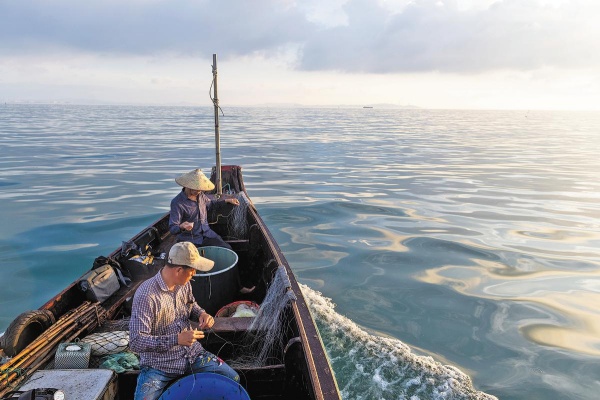
Fishermen sail into the estuary of the Lianjiang River in Haimen, Guangdong, in June. ZHANG YOUQIONG/YAO ZHIHAO/NANFANG DAILY
At dawn in Haimen town near the estuary, three local fishermen, including brothers Yang Yinglie and Yang Jubuo, can often be seen preparing to set sail. They recall the river's transformation from being clear to polluted and now to improving again.
The water was aquamarine some 20 years ago, they said, remembering the river when they were young. "It turned dirty and the whole port reeked very badly about a decade ago," they said. "Luckily, it got better once again and we are able to restart fishing in the port."
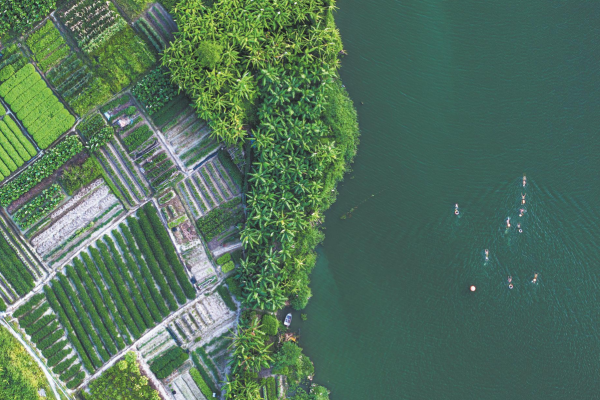
People swim in a tributary of the Lianjiang River in Shantou in June. ZHANG YOUQIONG/YAO ZHIHAO/NANFANG DAILY
Upstream in Puning's Xiazhai village, Chen Xiliang, the village's Party secretary, also patrols the river. Once choked with water hyacinths and garbage, the river now supports thriving agriculture with improved water quality, and villagers are turning the once-deserted land into profitable watermelon fields.
On June 18, two local regulations on Lianjiang River water quality control were implemented in Shantou and Jieyang. It marked a pioneering regional legislative effort, providing robust legal support for environmental management.
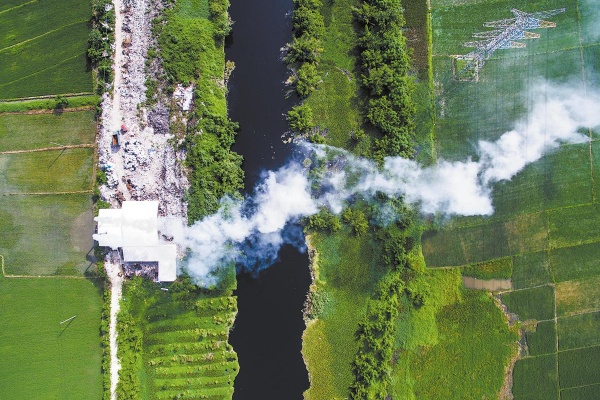
Smoke rises from a factory by a tributary of the Lianjiang River in Shantou, Guangdong province, in 2015. ZHANG YOUQIONG/YAO ZHIHAO/NANFANG DAILY