

Chinese collector Pang Laichen's former residence opens in Huzhou
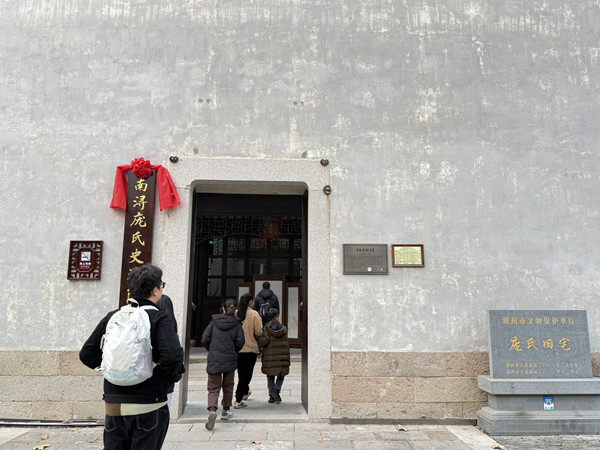
People visit the former residence of renowned Chinese collector Pang Laichen (1864–1949) in Huzhou, Zhejiang province. [Photo/Tide News]
The former residence of renowned Chinese collector Pang Laichen (1864–1949), also known as the Pang Family Historical Relics Exhibition Hall, has opened in Nanxun district, Huzhou, Zhejiang province.
This Qing Dynasty (1644–1911) architectural complex, covering 4,740 square meters, offers visitors a glimpse into the history of the Pang family.
Alongside the opening, original works of Pang Laichen's calligraphy and painting, as well as his personal jade seal, are on display.
The residence features three main sections: the western section, dedicated to the family's history, includes the Bajiao Hall, where Pang Laichen's early art collections were housed; the central section focuses on his art collection, documenting his renowned paintings and research; and the eastern section, built later, showcases a blend of Chinese and Western architectural styles and hosts new tourism businesses.
The Pang family was one of the "Four Elephants" of Nanxun, a term for the four wealthy merchant families who prospered through the silk trade in the late Qing Dynasty. Pang Yunpu (1833–89), Pang Laichen's father, capitalized on Shanghai's opening to trade by exporting Nanxun Jili silk to Europe, laying the foundation for the family's wealth.
Pang Laichen expanded into modern industries and was a passionate collector of traditional Chinese art, amassing over a thousand pieces.
The family also contributed to local development, establishing several educational and medical institutions in Huzhou.
In the 1950s, Pang Laichen's descendants donated many valuable artworks to State-owned museums, significantly contributing to China's cultural heritage and research.


