In early winter, the ancient ginkgo forests of Xuanbao town, Taixing, paint the landscape gold as leaves flutter like confetti, blending harvest scenes with bustling tourism.
Home to over 6,000 centuries-old ginkgo trees, the 32,000-mu (about 2,130 hectares) forest once symbolized ecological beauty without economic return — until an innovative "ginkgo+" model transformed it into a "green bank".
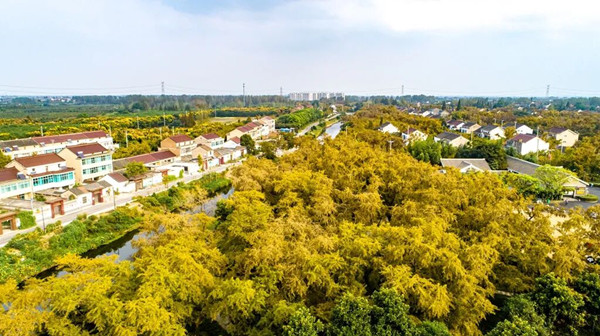
Xuanbao town's ancient ginkgo forest. [Photo/WeChat account: txfabu]
In 2018, Maoqun village pioneered intercropping ginkgo trees with Ophiopogon japonicus, replacing low-yield crops. Each mu now yields 8,000 lilyturf plants, boosting a farmer's income by 4,000 to 5,000 yuan ($565 to $707) and creating more than 300 permanent jobs. The model spans 28,000 mu town-wide, raising land-use efficiency to 85 percent.
Capitalizing on its ginkgo heritage, Xuanbao developed ecotourism hubs. The corridor within the National Ancient Ginkgo Park attracts throngs of visitors, while local cooperatives convert idle farmhouses into homestays, offering distinctive services.
"Our RV camp, a provincial star, serves 'ginkgo banquets' for immersive cultural experiences," says a business owner Jiang Ling.
Future plans include expanding agroforestry and balancing conservation with rural prosperity to ensure these centuries-old guardians continue nurturing both landscapes and livelihoods.