


Rooted in China's most ancient sacrificial rites, Qimen Nuo Dance in Huangshan began as a ritual to expel disease and pray for peace. Over centuries, it evolved into a way to honor ancestors, pray for harvests, and dramatize folk tales, and was designated as a national intangible cultural heritage item in 2008.
The soul of the dance lies in its vividly colored, exaggerated wooden masks, each meticulously carved and painted to identify characters.
Performed without a stage — often in village ancestral halls — the two-hour ritual uses no dialogue or song. Narrative is driven solely by drumbeats, gongs, and the dancers' deliberate, majestic movements.
Today, interactive activities like mask-painting workshops and study tours are breathing new life into this ancient art. Qimen Nuo Dance is more than ritual — it stands as a powerful symbol of Huizhou's cultural memory and enduring spirit.
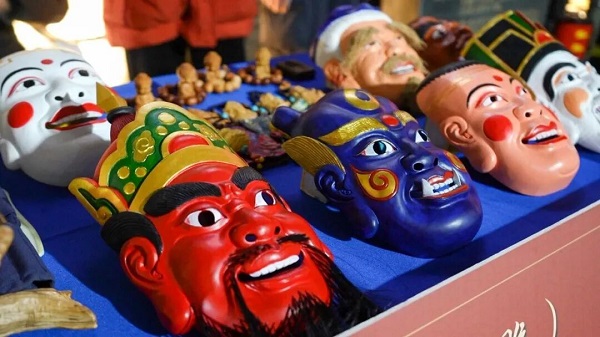
There are 10 distinct types of masks used in Qimen Nuo Dance. [Photo/Qimen Tourism]
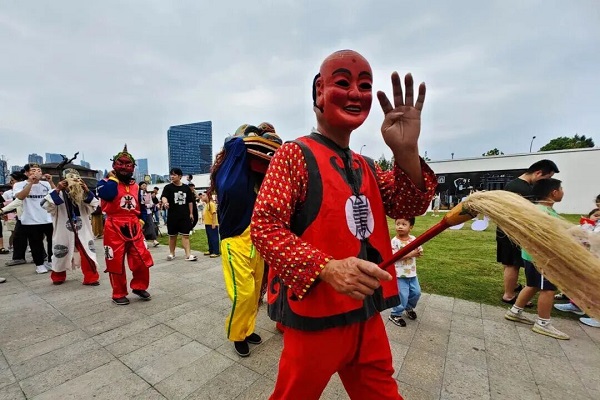
A Nuo dance troupe performs on the street. [Photo/Qimen Tourism]