
- Home
- Media Center
-
Events
- Wuzhen Summit
- Regional Forums
- Practice Cases of Jointly Building a Community with a Shared Future in Cyberspace
- World Internet Conference Awards for Pioneering Science and Technology
- The Light of Internet Expo
- Straight to Wuzhen Competition
- Global Youth Leadership Program
- WIC Distinguished Contribution Award
- Membership
- Research & Cooperation
- Digital & AI Academy
-
Reports
- Collection of cases on Jointly Building a Community with a Shared Future in Cyberspace
- Collection of Shortlisted Achievements of World Internet Conference Awards for Pioneering Science and Technology
- Reports on Artificial Intelligence
- Reports on Cross—Border E—Commerce
- Reports on Data
- Outcomes of Think Tank Cooperation Program
- Series on Sovereignty in Cyberspace Theory and Practice
- Other Achievements
- About WIC
- 中文 | EN


World Internet Conference hosts "Journey into Outstanding Cases — Journey into the Digital Porcelain Capital" event


On Jan 15, the World Internet Conference (WIC) hosted the "Journey into Outstanding Cases — Journey into the Digital Porcelain Capital" event at Jingdezhen, China's Jiangxi province. The event was attended by representatives from foreign embassies in China, including those of Morocco and Lesotho, members of the WIC Specialized Committee on Cultural Heritage Digitization, representatives from member organizations, and media outlets. They discussed how digital technology empowers cultural exchange and mutual learning, and explored ways to advance the preservation and transmission of cultural heritage through digital means.
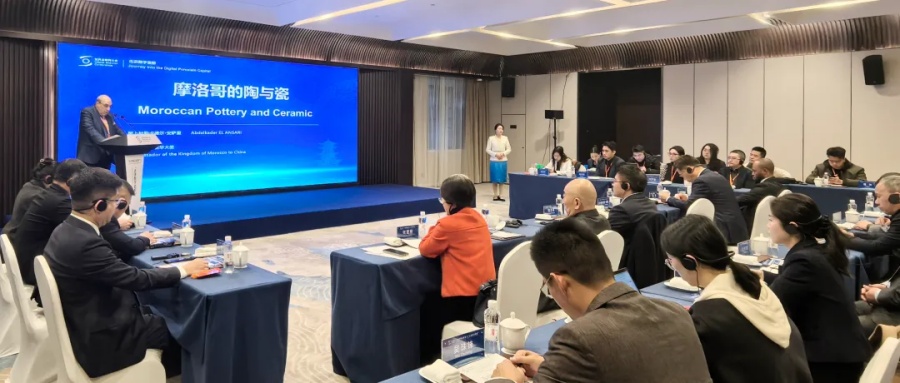
A representative from the WIC noted the transformative impact of digital technology on the preservation, dissemination, and exchange of cultural heritage, calling for international collaboration to advance digital preservation of cultural heritage and to promote cultural exchange and mutual learning among civilizations. Zhang Long, head of the publicity department of Jingdezhen, introduced the city's initiatives and achievements in leveraging digital technology to empower cultural heritage preservation and foster cultural exchange and mutual learning.
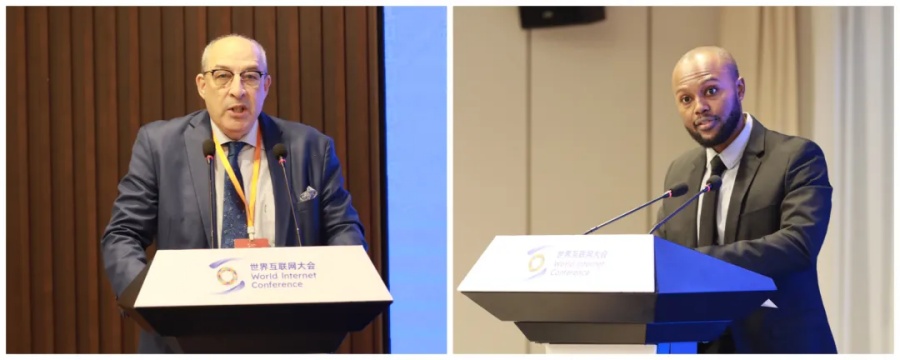
Speakers delved into the theme of "Digital Technology Empowering Cultural Exchange and Mutual Learning" from different perspectives in their discussions. Among them were Abdelkader El Ansari, Ambassador of the Kingdom of Morocco to China, and Chabana Chabana, First Secretary of the Embassy of Lesotho in China. They shared experiences and reflections from their countries and expressed their hopes to promote cultural exchange and mutual learning through international cooperation.
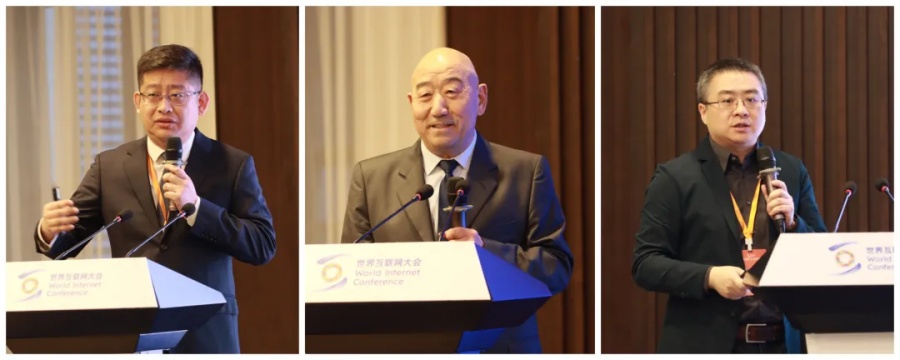
Experts such as Zhan Changfa, Co-Chair of the WIC Specialized Committee on Cultural Heritage Digitization, Recipient of the Knight of the Order of the Star of Italy and former Vice President of the Chinese Academy of Cultural Heritage, Zhang Rong, Researcher at Qingyuan (Beijing) Cultural Heritage Conservation and Development Center and Ph.D. from the National Heritage Center of Tsinghua University, and Hui Pengyu, expert of the Specialized Committee on Cultural Heritage Digitization and Chairman of New Dimensional Imagination Digital Technology (Beijing) Co., Ltd., shared their insights on the digitalization of cultural heritage from the perspectives of international cooperation, technological innovation, and industrial application.
Following the seminar, participants embarked on field visits to several key institutions. At the Jingdezhen Ceramic Research Institute, the Imperial Kiln Institute, and the Imperial Kiln Museum, they learned about the development of the Ceramic Digital Alliance and the application of digital technologies like multi-spectral imaging and 3D scanning in collecting, storing, and restoring cultural relics. Their visit to Jingdezhen Yishan Ceramic Industry Co., Ltd. and Micro Porcelain Technology (Jiangxi) Co., Ltd. focused on the "design-led smart manufacturing" model and the progress in R&D and industrialization of ceramic 3D printing. Finally, at the Taoxichuan Art Center, they explored how international artists engage with Jingdezhen through ceramic art and how digital technology is applied in contemporary ceramic creation.
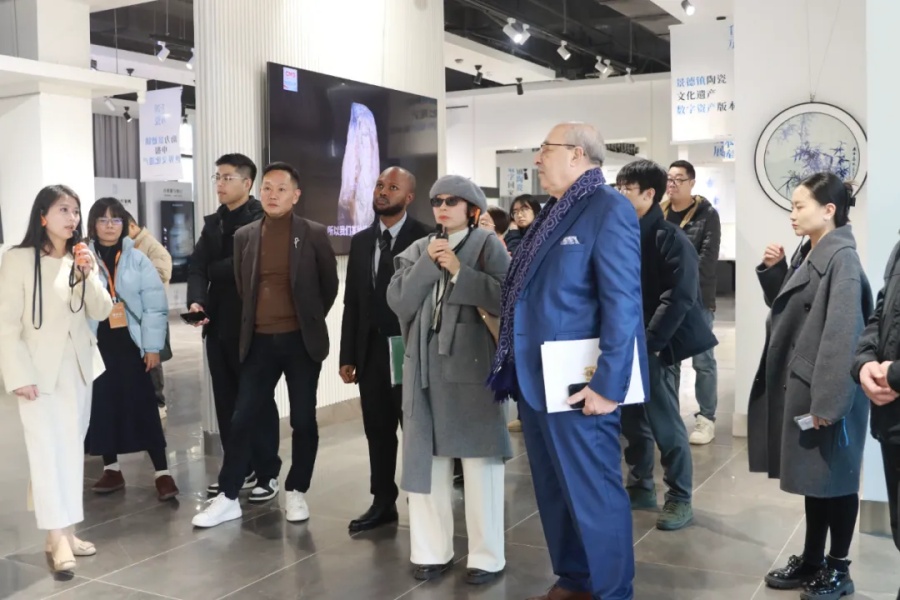
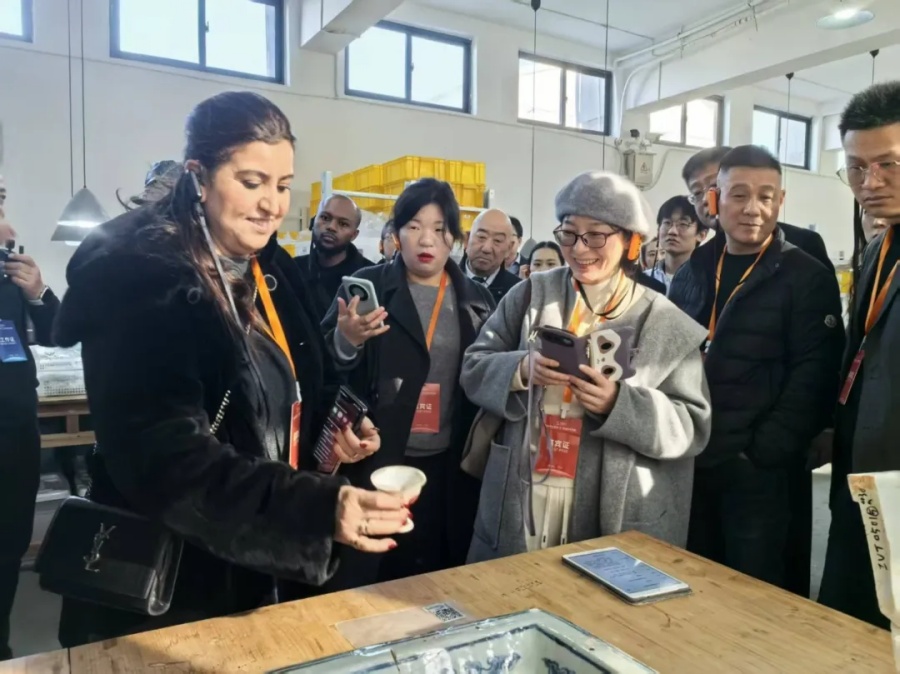
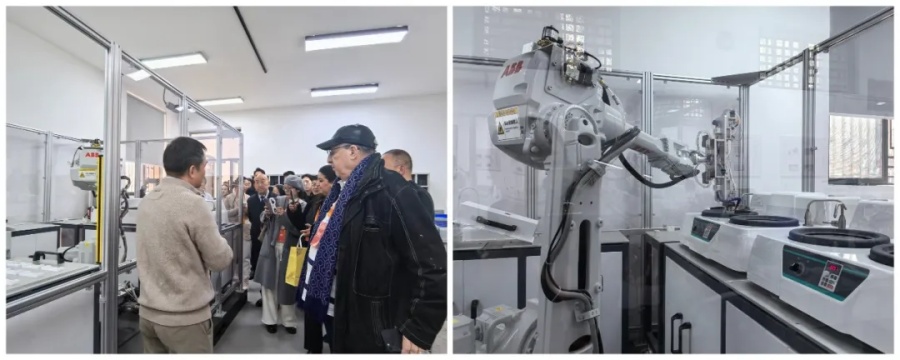
The participants emphasized that the event provided a significant opportunity for international dialogue. They pledged to jointly explore innovative, digitally-enabled pathways for cultural exchange, underscoring their commitment to building a community with a shared future in cyberspace.
The World Internet Conference (WIC) was established as an international organization on July 12, 2022, headquartered in Beijing, China. It was jointly initiated by Global System for Mobile Communication Association (GSMA), National Computer Network Emergency Response Technical Team/Coordination Center of China (CNCERT), China Internet Network Information Center (CNNIC), Alibaba Group, Tencent, and Zhijiang Lab.