
The city of Dongying in East China's Shandong province hosted the thematic event of the 2025 Cultural and Natural Heritage Day at the Yellow River Delta National Nature Reserve on June 14.
Since 2019, Dongying has led efforts to inscribe the Yellow River Delta migratory bird habitat as a UNESCO World Natural Heritage site. This was officially recognized in July 2024, during the 46th World Heritage Committee meeting.

Seen from far above, this magnificent tidal tree is one of the natural wonders of the Yellow River Delta. [Photo by Zhang Xiaolong/from WeChat account: hhkbhq]
At the opening ceremony, a promotional video about the Yellow River Delta's ecology was released, agreements were signed with national and international partners to strengthen cooperation on migratory bird habitat protection and the Oriental White Stork Research Center was officially unveiled.
The event is said to have shown Dongying's commitment to implementing outcomes from the World Heritage Committee and to advancing conservation as a whole.
Spanning East Asia–Australasia and West Pacific flyways, the reserve has become a vital habitat for endangered birds, including oriental white storks and black-faced spoonbills. Its species richness has grown significantly, with 374 bird species now recorded there.
Moving forwards, the reserve will continue to enhance its biodiversity, restore wetlands and strengthen ecological monitoring using its pioneering integrated conservation platforms, smart park management systems and collaborative international initiatives. Recent efforts have led to record nestings of rare birds and its recognition as a national model for conservation.
All in all, Dongying is said to remain dedicated to promoting the "Yellow River Estuary" brand — merging heritage, ecology, education and tourism while advancing global cooperation to protect a shared natural heritage.
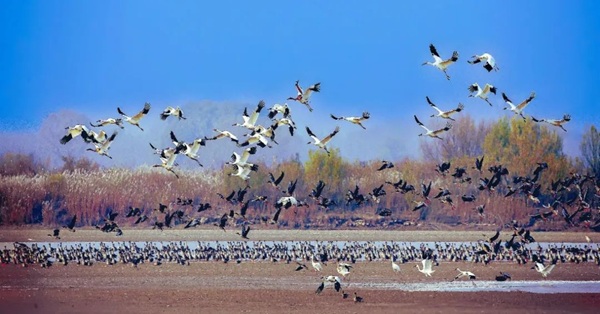
The Yellow River Delta is increasingly becoming the preferred habitat for more and more bird species. [Photo by Fu Jianzhi/from WeChat account: hhkbhq]
