
Hohhot sees progress in elderly care services


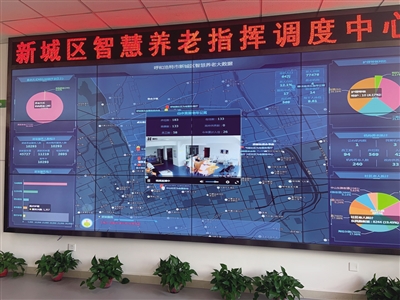
A smart elderly care command and dispatch center has been set up in Xincheng district, Hohhot. [Photo/Hohhot Evening News]
Hohhot, capital city of North China's Inner Mongolia autonomous region, has been making strides in improving the city's elderly care system over recent years, according to local media reports.
At present, there are 104 home and community elderly service centers in the city. These communities consist of 41 elderly service restaurants, covering 152,000 elderly people and benefiting 57,000 more.
There are 33 elderly care institutions with 6,122 beds, seven rural nursing homes with 735 beds, and 233 rural mutual aid and happiness homes with 17,538 beds.
In August 2019, Hohhot was officially designated as part of the fourth batch of pilot areas for the reform of home and community elderly care services, supported by the central government.
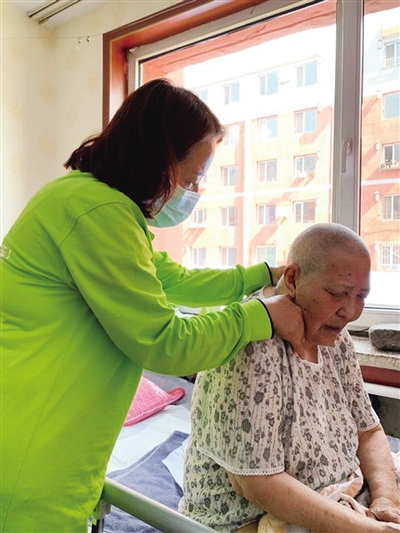
Elderly services are provided to senior residents in Hohhot. [Photo/Hohhot Evening News]
Focusing on a goal of "convenience, intelligence, specialization and affection", through the establishment and improvement of six systems, Hohhot is striving to create a 15-minute home and community elderly service system.
Based on the number of elderly people in its jurisdiction and the area covered by its service centers, Hohhot has established 83 service standards in 11 categories, including meal delivery, daily care, housekeeping, and psychological comfort.
It has adopted online and offline methods to integrate meals, cleaning, and assistance. Diversified services such as travel, bathing assistance, medical assistance, emergency assistance, and rehabilitation care are delivered to the home and bedsides of the elderly, and are well-recognized by the elderly at home and in the community.
In addition, the city has been developing intelligent models of elderly care services with a supervision service system established for municipal supervision, district dispatch and community services.
The system provides a number of life services for the elderly, such as health consultation, water and meal deliveries, ticket booking, medical appointments, legal rights protection, and psychological consultations.
The command and control centers will integrate third-party units and service information through the system, and dispatch the nearest caregivers according to the elderly person's needs.
In the future, the city will take internet-plus-pension and long-term care insurance as a starting point, make every effort to promote the development of home, community, and embedded institution pension service facilities, and continue to promote the reform of home and community pension services.