Liangjiang commits to environmental protection and sustainable development
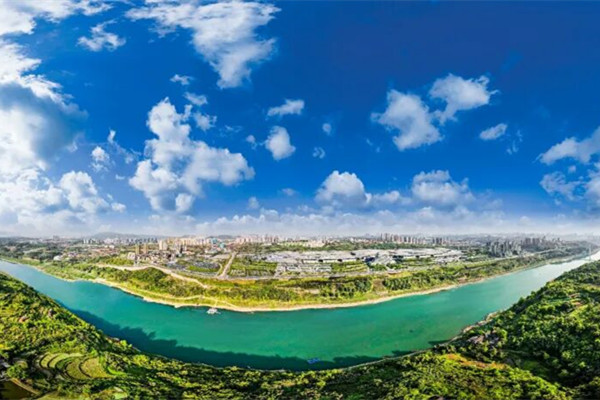
Jialing River runs through Liangjiang. [Photo/WeChat account of Liangjiang New Area]
As the Yangtze River Economic Belt strategy marks its 10th anniversary in 2026, Liangjiang New Area, situated at the confluence of the Yangtze and Jialing rivers, is undergoing a significant transformation.
The shift emphasizes ecological priorities and green development, underscoring a strong commitment to sustainable practices.
A notable example of this transformation is the shift from fishermen to river guardians. In Luoqi town, Tan Wenqing, once a fisherman, now serves as a river guardian. This change is part of a broader initiative launched five years ago to cease fishing activities and protect the river's biodiversity.
Liangjiang has implemented comprehensive measures to strengthen conservation efforts, including strict fishing bans and enforcement of the Yangtze River Protection Law. The area utilizes advanced technology, such as drones and smart monitoring systems, to enhance river management.
The commitment to green development extends to industrial practices. At the Seres Super Factory, emissions are nearly completely purified, and no harmful chemicals are discharged.
Authorities encourage key enterprises to adopt eco-friendly upgrades, reducing carbon emissions by 18,000 metric tons annually, while also generating significant economic benefits.
Liangjiang's green transformation includes developing a low-carbon industrial chain, supported by a "government-bank-enterprise" platform that channels financial resources into green projects.
This shift is also reflected in its logistics hub, Guoyuan Port, a vital link in the Belt and Road Initiative. The port has invested over 200 million yuan ($28.62 million) in eco-friendly infrastructure and smart technologies.