


Recently, the China Institute of Atomic Energy (CIAE), a subsidiary of China National Nuclear Corporation (CNNC), has successfully developed a next-generation general-purpose 10 MeV electron linear accelerator, with its technical indicators having reached internationally advanced level.
The accelerator delivers a pulse current of up to 400 mA, with a capture efficiency of 84% and a power utilization rate of 75%. Operating at a duty cycle of only 0.8%, it achieves a beam power of 32 kW. With its high beam power, high capture efficiency, and high power utilization, the system provides a more economical, stable, and efficient solution for large-scale applications such as food and pharmaceutical irradiation, material modification, agricultural irradiation, and medical sterilization.
As an advanced tool in nuclear technology applications, electron linear accelerators generate high-energy electron beams or X-rays for material modification and sterilization. They offer significant advantages, including operation at room temperature, no material damage or residual toxicity, environmental friendliness, low energy consumption, simple operation, high automation, and suitability for large-scale industrial use. As a result, they are widely applied in industrial, medical, and environmental sectors.
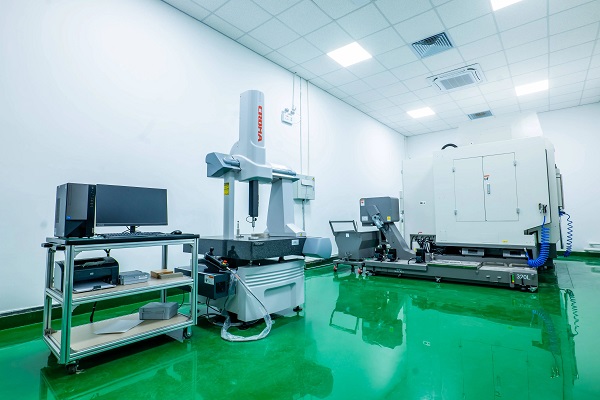
To support independent R&D and manufacturing of core accelerator components, the Nuclear Technology Comprehensive Research Institute has established an Advanced Linear Accelerator Core Component R&D and Testing Center. The center has built a complete process chain—from raw material processing and cavity tuning to full component fabrication—featuring higher precision, greater efficiency, and enhanced automation. This greatly enhances the R&D and production capacity and efficiency of core components like high-performance accelerator structures, providing a solid foundation for achieving independent control of core accelerator technologies and in-house development and production of key components.