


On November 22, Unit 2 of China National Nuclear Corporation (CNNC) Zhangzhou nuclear power project was successfully connected to the grid for the first time, delivering its first kilowatt-hour of electricity. With this milestone, both units of the first-phase mass construction project of Huanglong One are now generating electricity, contributing to China's energy mix optimization and its "dual carbon" goals.
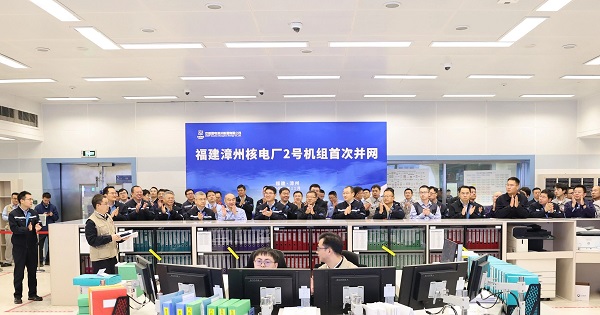
"Hualong One", a national symbol of China's nuclear power on the global stage, is a self-developed third-generation pressurized water reactor with fully independent intellectual property rights. It has become the world's most widely adopted third-generation nuclear technology in terms of both operational and under-construction reactors. As a main reactor type in modern nuclear development, it exemplifies Chinese technology's ability to compete globally, highlighting the advancement and reliability of China's solutions in the nuclear sector. Construction of Zhangzhou Nuclear Power Unit 2 began on September 4, 2020. Throughout its development, the project prioritized safety and quality. Following civil engineering, equipment installation, and system commissioning, the unit loaded fuel on October 11, 2025, and achieved first criticality on November 3, 2025. Post-grid-connection checks have confirmed the unit is in good condition, with all technical indicators meeting design requirements. The unit will now undergo planned tests to verify its performance for commercial operation.

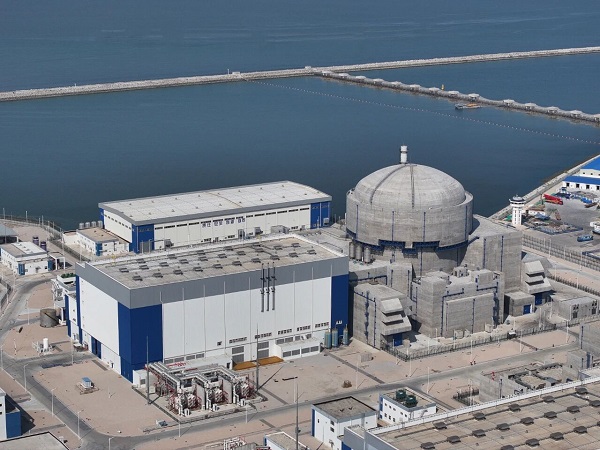
The Zhangzhou nuclear power project marks the beginning of mass construction of "Hualong One" nuclear reactors and is currently the world's largest "Hualong One" nuclear power base. The project plans to install a total of six units. Once fully operational, the base is expected to provide over 60 billion kWh of clean electricity annually, enough to meet 75% of the combined electricity demand of Xiamen and Zhangzhou, two major cities in southern Fujian province, China. This will effectively improve Fujian's power supply structure by reducing the need for electricity transmission from north to the south.
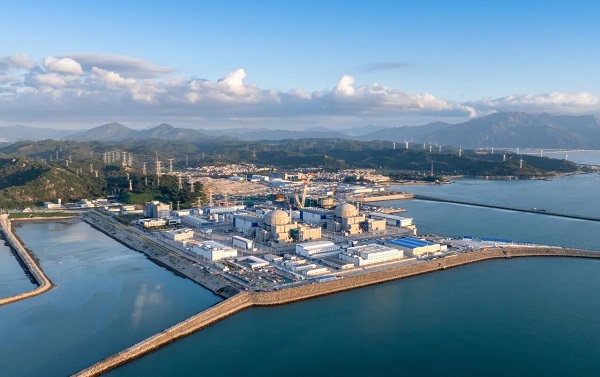
To date, Unit 1 of the Zhangzhou Nuclear Power Plant has safely and stably generated over 8.8 billion kWh. Unit 2 is expected to enter commercial operation within the year. Units 3 and 4 are under civil construction and installation, while preliminary work for units 5 and 6 is under steady progress. Once in full operation, units 1 and 2 are expected to generate 20 billion kWh annually, reducing carbon dioxide emissions by about 16 million tons, equivalent to saving over 6 million tons of standard coal each year.