Beijing's business hub takes on new image
 |
|
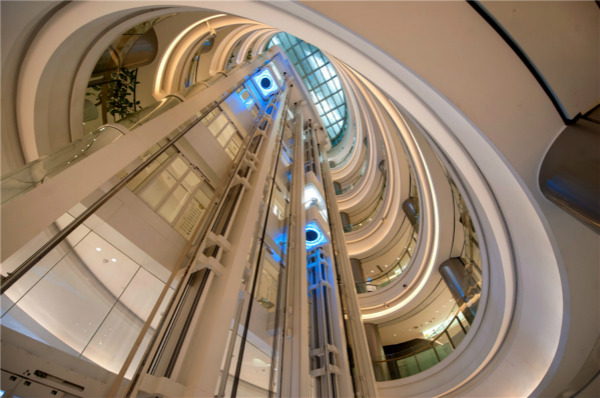
An interior view of the third phase of the China World Trade Center, the latest addition to the CBD's skyscrapers. CHEN JIANLI/XINHUA |
One of a kind
Among the buildings in the CBD, Beijing Parkview Green Fangcaodi stands out.
It is hard not to pause and gaze at this giant, modern, angular structure.
Built in 1992, Parkview Green houses high-end offices, boutique hotels and a shopping mall with carefully selected businesses that include Van Cleef & Arpels, Tesla and International Watch Co.
However, focusing on luxury lifestyle brands is not what makes Parkview Green unique.
It now features futuristic sculptures, paintings and installation artworks, which can be seen on entering the building. More than 1,000 pieces are on show, including 30 works from master surrealistic artist Salvador Dali.
Oliver Lai, general manager of Beijing Parkview Green Fangcaodi, said the property is one of a kind and refuses to replicate anything else, or to be replicated.
"Beijing is a city of fast changes, like nothing I have experienced elsewhere," Lai said. "As a business, we need to change as the world changes. We have observed the development of the Chinese economy in recent years, and people's demands are changing as the economy grows.
"Rather than saying Parkview Green Fangcaodi has brought a brand-new shopping experience to Beijing, I'd say the fast development of the city has provided the possibility to combine life with art."
Lai also said the company has a collection of masterpieces and provides visitors with space in which they can immerse themselves in art, allowing it to become part of their lives.
Parkview Green has added a new trophy to the mall's awards cabinet, recently winning the Beijing Top 10 foodie destinations award from global city guide Time Out and Winshang, a Chinese commercial property information outlet.
Guo Zengli, president of Mall China Information Center, a shopping mall information and research organization, said, "The success of Chinese shopping malls used to lie in precise marketing, but nowadays malls with a vision have entered consumers' inner world.
"Parkview Green Fangcaodi does not have a very ideal location, not being close to a subway line, but this hasn't stopped the mall from becoming an industry symbol and a city landmark, because it is very hard to imitate or duplicate Parkview Green."
Guo added that Parkview Green Fangcaodi carefully selects brands, works alongside them and always seeks to improve, meaning the shops suit the shopping mall and become part of its culture.
"If a shopping mall or a brand wants to shock the market, it needs to build its own intellectual property, and make adjustments according to the changing market demand with its soft power and service," Guo said.
 |
|
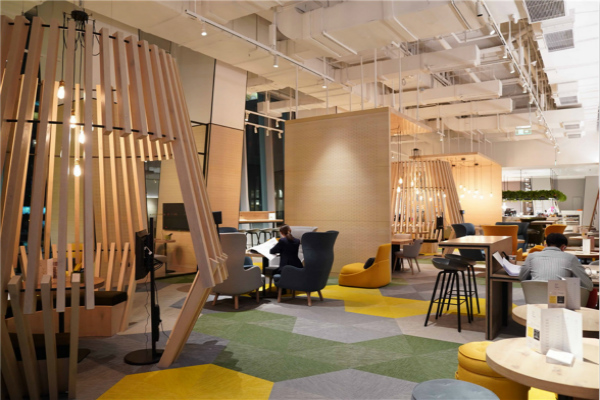
Hotel Jen Beijing opened last year at the China World Trade Center. CHEN JIANLI/XINHUA |
Office changes
As modern technology reshapes how people work, office space is changing, too.
Such changes are making the CBD more attractive for Beijing's startups and small businesses.
Cheng Ziheng, senior director of co-working brand KrSpace, which has two properties in the CBD and many others in cities nationwide, said, "I grew up in Beijing and used to commute through the CBD to school every day.
"Back then, the first phase of the China World Trade Center was the only large building in the area. The offices mainly housed foreign companies, because no one else could afford such high rents.
"Years ago, you would never have thought that Wi-Fi would work faster than a cable connection. Large rooms were needed to store paper files, and people had to fax, copy and print the files constantly, so a company needed more space."
But the way people work has changed. More and more offices are adopting a paperless environment. Files are written, sent and stored online. With just a laptop, a desk and a chair, the modern office employee can work anywhere.
Such a change means less space is required. More businesses, especially small ones, are able to rent an office in the CBD, which can bring great opportunities for companies such as Cheng's.
At KrSpace, a four-person office space costs about 14,000 yuan a month, about the same for other office buildings in the area.
"But it will help you save a lot of money, because you don't have to start from nothing, as in a traditional office space," Cheng said.
"In a shared office, you don't need to worry about the facilities, as we offer everything, including the reception area, break rooms, office equipment and lounges.
"You can rent conference rooms by the hour, unlike in a traditional office, where companies have to rent the space continually even if they don't use it very often."
He said such a model has made offices in the CBD accessible to more businesses.
"Foreign companies' local offices may only have three to four staff, but they need a central location. So they can rent here," he said.
"Temporary teams in town for short-term projects, such as accounting teams, startups and companies in transition periods, can all benefit from an ideal location in the CBD without worrying too much about costs."
According to research by online commercial property rental platform Haozu, the shared office market in China is expanding by more than 50 percent annually. By 2030, at least 30 percent of offices will become sharing spaces, it forecast.
The report said the market size was about 9 billion yuan last year and is expected to top 100 billion yuan by 2030.